
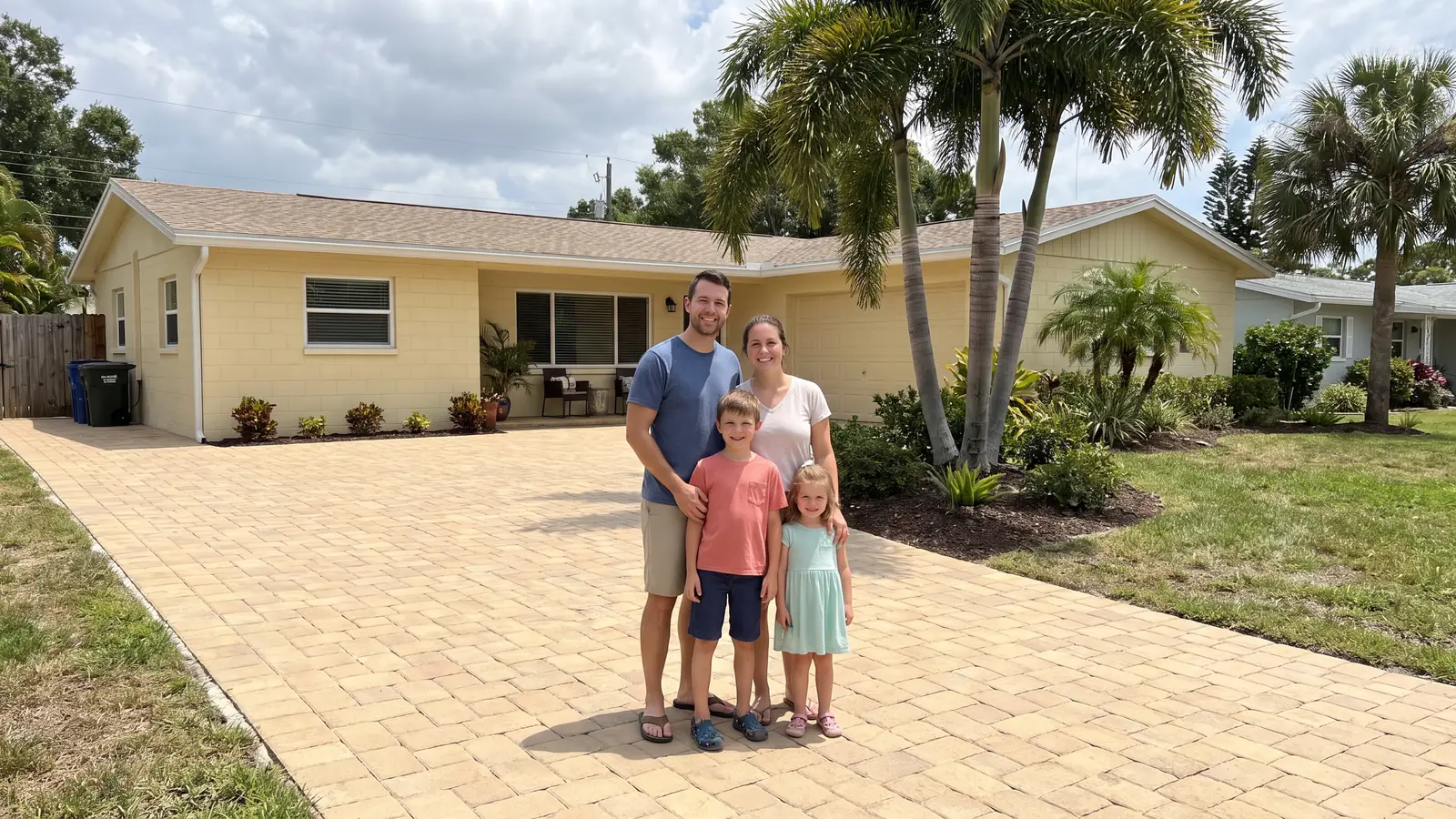
Deeper color, tighter joints and easier upkeep
Paver Sealing in Sandalwood, FL
Call (904) 541-9860 for a free paver sealing estimate at your Sandalwood home.
- Brings out deeper paver color
- Fresh joint sand helps lock pavers in place
- Gives weeds less room to grow
- Makes the surface easier to keep clean
- Free estimate, no obligation
Request a Free Estimate
Free, no obligation.
Who can seal pavers at my Sandalwood home?
A local contractor seals pavers throughout Sandalwood, FL, and you will hear back within 1 business day, usually much sooner. The estimate is free and booking is up to you. To begin, call (904) 541-9860.
Sealing deepens the color, keeps joint sand where it belongs and makes dirt and algae easier to rinse off. Picture the driveway you pull into every evening, faded at the edges and sandy at the seams, turned dark and even again with every joint full. A driveway takes tires and oil, and a pool deck takes splash and bare feet, so each area gets its own plan. Say how each one gets used when you get a free estimate, and the plan can fit.
Paver Sealing Sandalwood Is Proud to Serve Northeast Florida
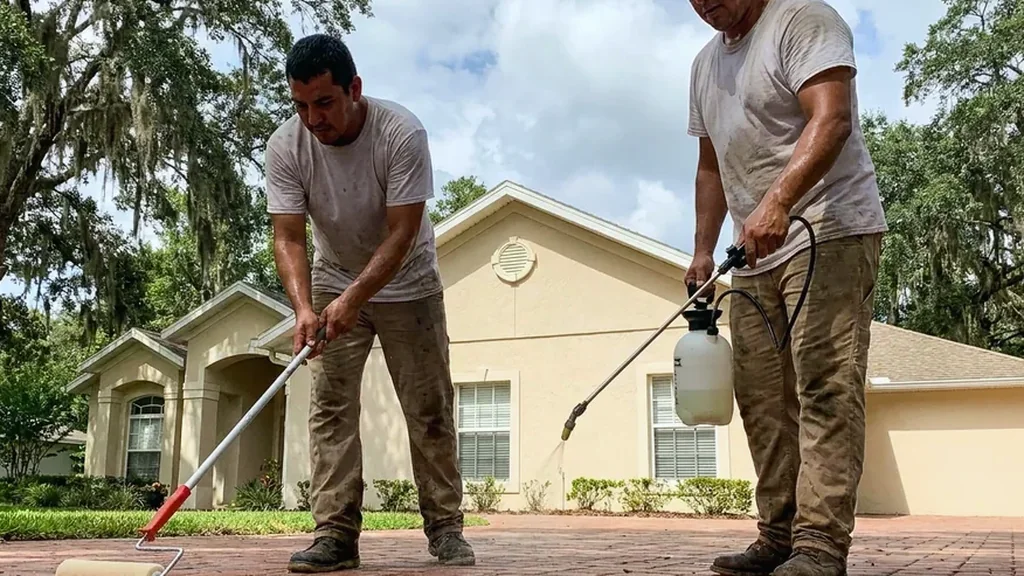
What is included when pavers are sealed in Sandalwood?
Four parts make up the job: a walk-through, a deep clean, fresh joint sand and the sealer coat. The cleaning takes the longest. To go over the parts for your home, call (904) 541-9860.
Walk-through
The contractor measures the area and notes sunken spots, cracked pavers, old sealer and standing water before setting a price.
Deep clean
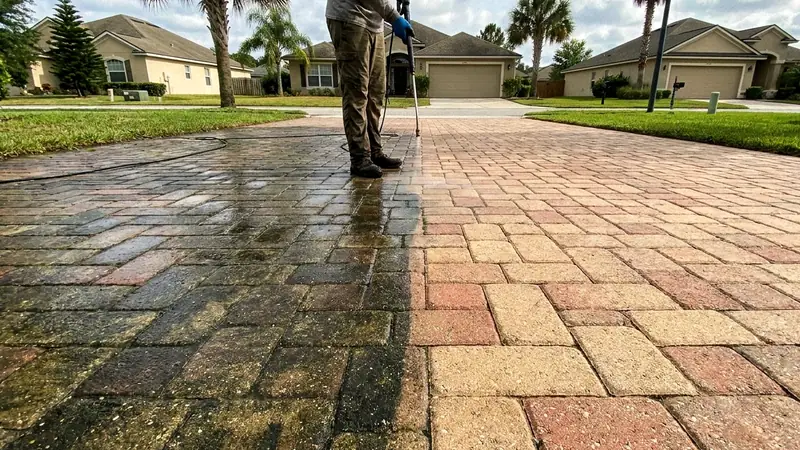
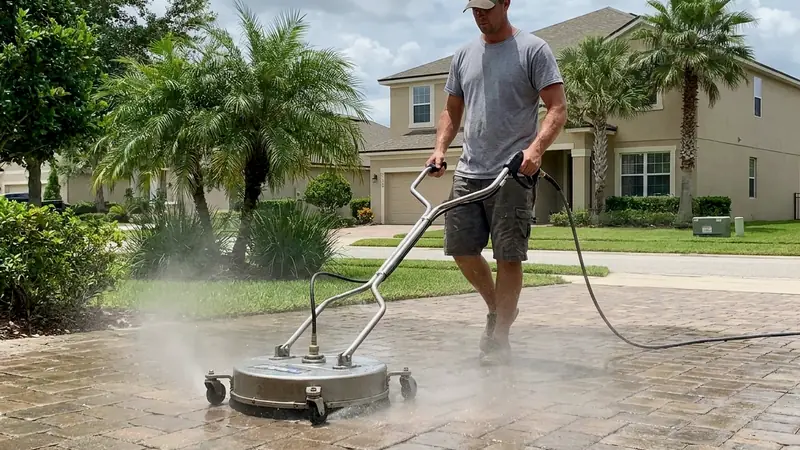
Algae, rust and oil get a treatment made for them, then a rotary surface cleaner washes the surface at low pressure.
Joint sand
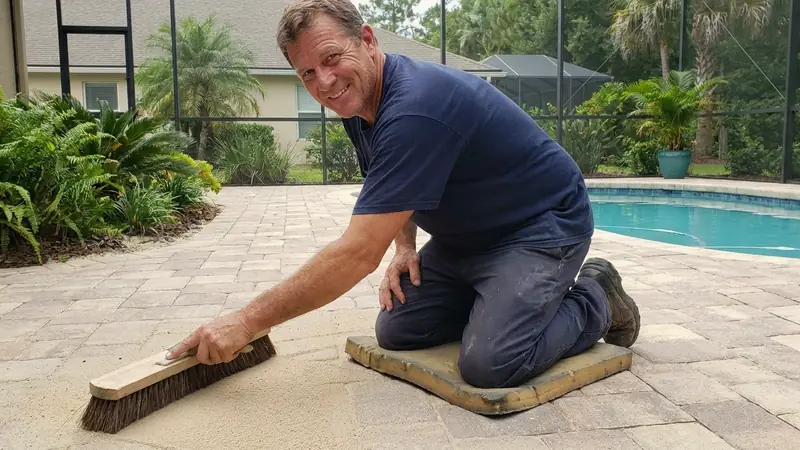
Polymeric sand goes into the joints and is misted with water so it sets, which helps hold the pavers and slows weeds.
Sealer coat
A pump sprayer lays the sealer down on fully dry pavers, and a dry foam roller evens it out.
How can I tell my pavers need sealing?
Look for color that has gone chalky, joints sitting below the paver edges, sand spread across the driveway after a storm and water that soaks in rather than beading up. Adding sand early is cheaper than relaying pavers after they move. For a quick opinion, call (904) 541-9860.
Is it ever too early to reseal?
Yes. Family Handyman says sealing more often adds no protection and can leave a film that discolors pavers, and it suggests sealing only once the old coat has broken down. If the pavers still bead water, wait. To get yours checked, get a free estimate.
Which sealer works well in Jacksonville weather?
No single product suits every home, so ask the contractor which sealer goes on and why. Unilock, a paver maker, calls water-based sealer the usual homeowner choice because it is low in odor and easy to clean up, and says solvent-based sealer is a little more durable but needs pavers and joints that are perfectly dry. To compare options for your pavers, call (904) 541-9860.
Coverage differs too, with water-based products at about 100 to 150 square feet a gallon and solvent-based at about 80 to 120. Unilock puts both at roughly $80 to $150 a gallon, which is one reason a thin, even coat beats a heavy one. Ask which product goes where when you get a free estimate.
Should the sealer match the paver?
Yes. Unilock notes that products made for concrete pavers may not suit every stone, and that brick and natural stone need a check first. A small test patch settles the question. Mention what your pavers are made of when you call (904) 541-9860.
Wet look or matte: which finish suits my home?
Choose wet look for deep, rich color with some shine, or matte to stay close to how the pavers looked new. Around a screened pool, footing matters more than shine, since Unilock warns that high gloss can turn slippery when wet. A penetrating matte product keeps traction. To see samples of both, get a free estimate.
How often should pavers be resealed in Sandalwood?
Expect two to five years from a coat. Safe Touch calls two to three years typical around Jacksonville, and Unilock says many owners reapply every three to five, with solvent-based sealer lasting four to five years when kept up. Full sun, pool chlorine and storms shorten it. If splashed water soaks in instead of beading, the coat is wearing out. To have it checked, call (904) 541-9860.
Do extra coats protect pavers longer?
No. More sealer does not mean more protection. Unilock links haze and lap marks to uneven application, and warns that a second coat put on before the first one sets can leave a whitish film. It asks for one continuous pass. If a quote sells three coats as extra armor, ask why before you get a free estimate.
When is the right time to seal pavers in Sandalwood?
Pick a dry stretch, and wait 60 to 90 days after a new install. Unilock says efflorescence, the white salt haze, can take two to three months or up to a year to clear, and sealing over it locks the deposit in. Safe Touch describes fall as a drier stretch before winter, which makes it a natural window in Jacksonville. If your pavers are new, mention the install date when you call (904) 541-9860.
Unilock also asks for clear skies for 24 to 48 hours before the job, and up to 48 hours of dry weather after it. Its target is 50 to 90 degrees, with 75 the sweet spot, because pavers that are too hot can stain or peel early. Duval County's summer storms, which average 6.77 to 7.56 inches a month from July to September, can move a date. To line up one that fits the forecast, get a free estimate.
Will sealing fix sunken pavers?
No. A coat of sealer cannot raise a low paver or close a gap, and Unilock says plainly that sealing is not a cure for drainage or base problems. Pavers that rock under a car or sit in a puddle after rain need their base repaired first. Find out if leveling is included or priced apart when you get a free estimate.
Which areas around a Sandalwood home can be sealed?
Driveways, pool decks, patios and walks can all take a coat. Each wears in its own way, so the plan changes from one to the next. To begin with the spot that bothers you most, get a free estimate.
Driveways
A driveway carries tires, oil drips and the longest stretch of sun. Sealing one keeps the color even and the joints full where cars turn.
Pool decks and screened lanais
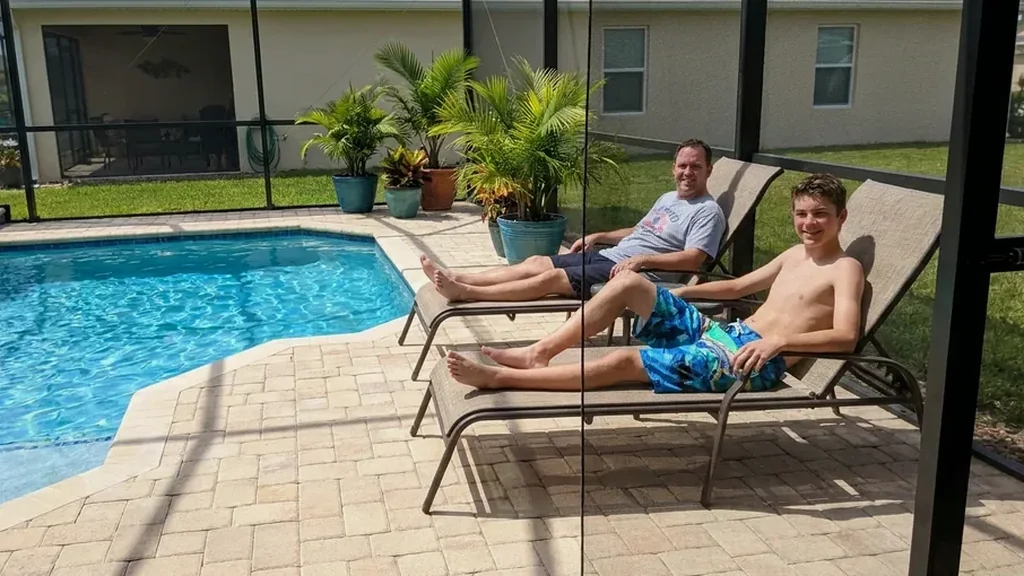
Chlorine, splash and wet feet are hard on pool pavers all year. Sealing a deck should leave it clean without making it slick.
Back patios
A patio often sits in shade beside a fence or porch, so green growth starts early there. Sealing a patio puts the focus on the damp corners.
Front walks
Walks sit close to beds, mulch and sprinkler heads. Sealing the front walk is a small job that every visitor sees first.
What causes paver trouble around Sandalwood?
Five problems come up again and again: sun fading, green film, lost joint sand, orange or oily marks and cloudy old sealer. Each is cheaper to handle early. To find out which of them you have, call (904) 541-9860.
1. Sun fading
A driveway with no shade gets sun from morning to evening, and plain pavers lose depth of color first there. A fresh coat brings some of it back and slows the next round.
2. Green film after wet summers
The National Weather Service normals for July, August and September at the Jacksonville airport are 6.77, 6.88 and 7.56 inches of rain. Pavers that stay damp in that stretch grow algae in shaded corners.
3. Joint sand lost to storms
A Jacksonville washing company says summer storms wash sand out of pool decks and driveways. Empty joints let pavers shift and give weeds a place to start.
4. Orange or oily marks
Western Interlock, a paver supplier, treats iron stains with a heated washer and a cleaner made for them, and it sells an oil extractor for motor oil. Marks like these need their own treatment before any coat.
5. Cloudy old sealer
Unilock says a whitish film can come from trapped moisture, too much sealer or a new coat over an incompatible old one. Failed sealer is stripped first, not coated over.
What does paver sealing cost in Sandalwood?
Expect about $1.75 to $3.25 per square foot to clean, sand and seal, the range Safe Touch publishes for Jacksonville. Size moves the rate, and Safe Touch says the price sits higher when an old coat has failed and has to be stripped. Unilock lists sealer at $80 to $150 a gallon, so a bid that is far below the range probably leaves out prep. To get a number written for your home, get a free estimate.
The table shows what that range means for common sizes. Bring a quote you already have and compare it line by line. To talk through one, call (904) 541-9860.
Looking for a wash instead? The cleaning and joint sand guide covers it, and the areas covered are listed too. You can also return to paver sealing in Sandalwood.
| Paved area | Typical example | Clean, sand and seal |
|---|---|---|
| 300 sq ft | Small patio or walkway | $525 to $975 |
| 600 sq ft | Two car driveway | $1,050 to $1,950 |
| 1,000 sq ft | Large driveway or pool deck | $1,750 to $3,250 |
| 1,500 sq ft | Driveway plus pool deck | $2,625 to $4,875 |
Math based on the $1.75 to $3.25 per square foot that Northeast Florida paver companies published as of November 2026. Your contractor sets the actual price after seeing the surface. Repairs, leveling and stripping failed sealer are usually extra.
Why hire a contractor who works around Sandalwood?
A contractor who covers this part of Jacksonville already plans for downpours and sprinkler schedules. You still get the price in writing and time to think. To begin, call (904) 541-9860.
A contractor who works Sandalwood
A company that covers this part of Jacksonville has handled summer downpours and sprinkler schedules on streets like yours. The first visit then starts from experience.
A price you can walk away from
The visit is free and the quote is written down. If the number does not suit you, you thank the contractor and move on.
Published rates to compare
Jacksonville companies post what they charge per square foot, and this site shows that range. A bid far outside it deserves a question.
Your schedule, your decision
Take the quote home and read it. Read the contractor standards page and confirm each item before you sign anything.
Ready for a free paver sealing estimate in Sandalwood?
Phone or use the short form, and the answer arrives within 1 business day, usually much sooner.
Free, no obligation
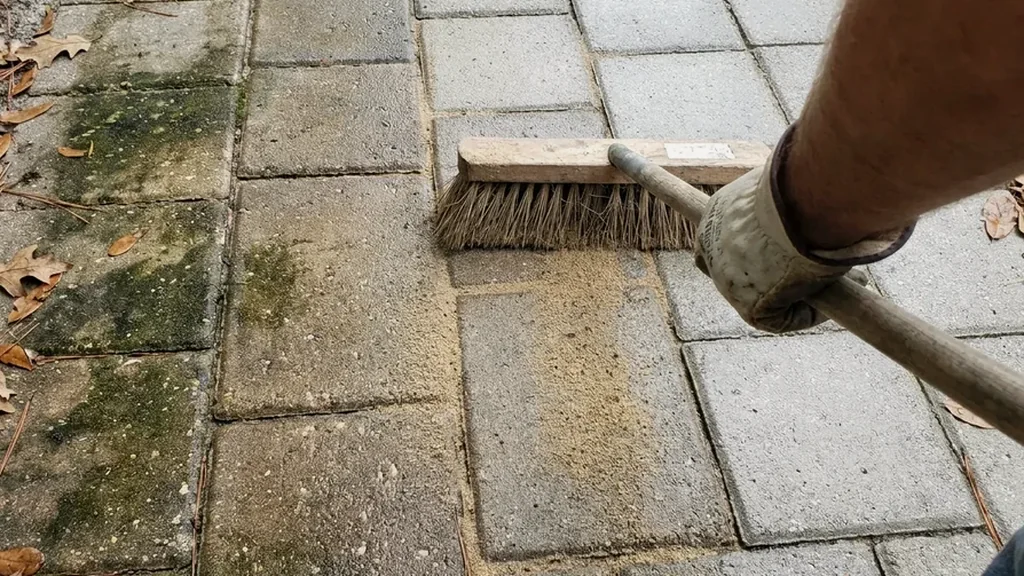
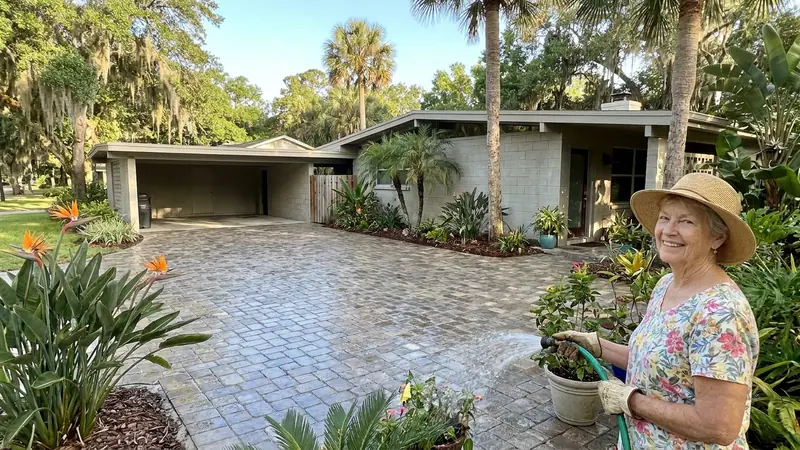
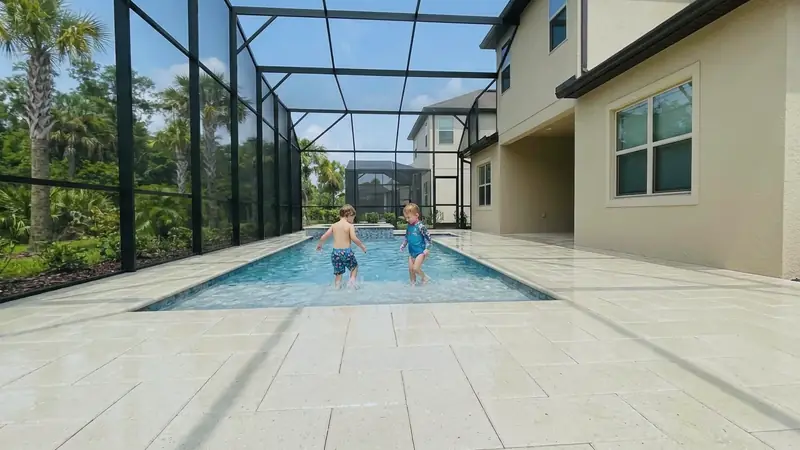
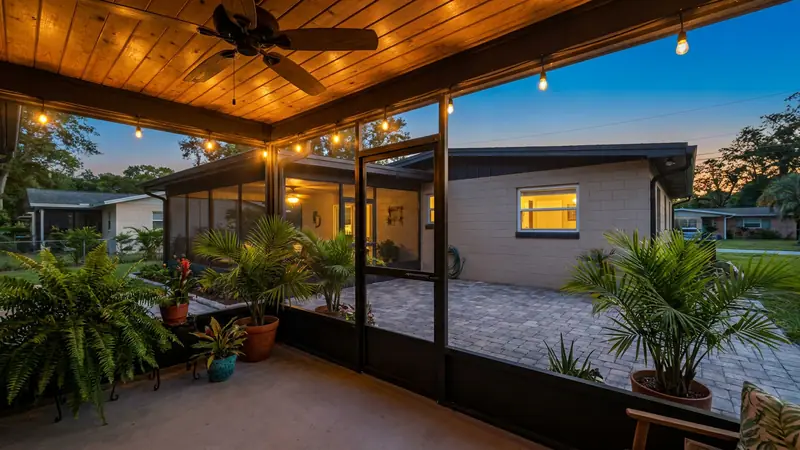
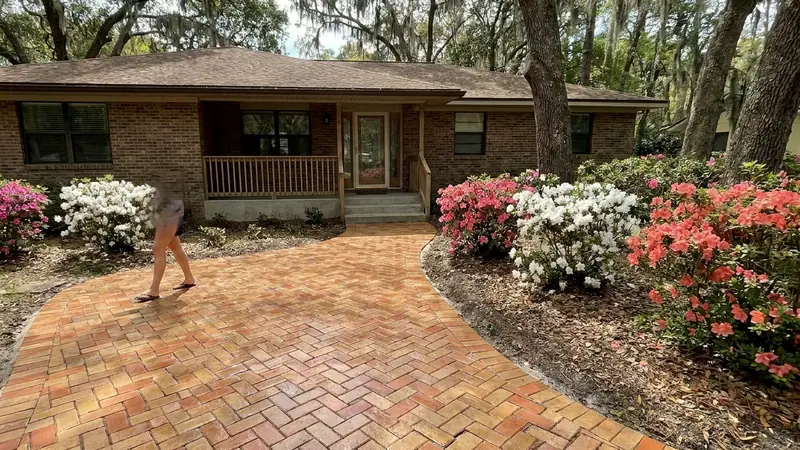
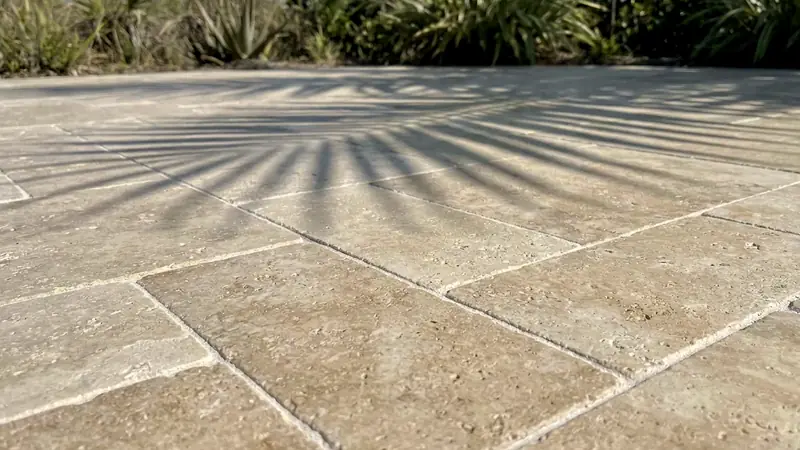
How do Sandalwood pavers look after a fresh seal?
How does the paver sealing process work from start to finish?
Most jobs follow five steps, from the first measurement to the final walk-through. If you are ready to schedule, call (904) 541-9860.
1. Measure and inspect
The contractor measures the area for the sealing quote and notes sunken spots, cracked pavers, old sealer and any place water stands.
2. Treat and wash
Algae gets a bleach rinse, oil gets an extractor and the surface is washed with a rotary surface cleaner. That tool spins two heads an inch or less above the pavers, with pressure kept under 1,500 PSI.
3. Refill the joints
When the pavers are dry, polymeric sand is swept in and misted with water to activate it. Extra sand is cleared off the surface so it cannot harden into haze.
4. Let it dry
Unilock asks for a few hours in warm sun after a wash, or about a day in cool shade, and clear skies for 24 to 48 hours.
5. Seal and walk it
When sealer is part of the job, a pump sprayer lays it down in one continuous pass and a dry foam roller evens it out. The contractor walks the area with you and explains how long to stay off it.
Frequently Asked Questions
Why is paver sealing so expensive?
Prep, not product, is where most of the money goes. A full job means treating stains, washing, letting the pavers dry, refilling the joints and laying the coat in one pass. Safe Touch, a Jacksonville washing company, adds that empty joints or failed sealer turn it into a two-day restoration, and sealer itself runs $80 to $150 a gallon, per Unilock.
How long does paver sealing last in Florida?
Usually two to five years. Safe Touch calls two to three years typical for Jacksonville, and Unilock says solvent-based sealer can last four to five years when kept up. Full sun, pool chlorine and summer storms push a coat toward the short end.
How much does it cost to have pavers cleaned and sealed?
Safe Touch lists $1.75 to $3.25 per square foot for the full clean, sand and seal. A 1,000 square foot driveway comes to about $1,750 to $3,250. Stripping a failed coat and repairs usually cost extra.
How much should I pay for paver sealing?
A fair quote lands inside the published $1.75 to $3.25 per square foot, and it should say what the number covers. A price far below the range often means the cleaning or the joint sand was left out. Ask for the steps in writing before you compare two bids.
What do professionals use to seal pavers?
A pump sprayer to lay the coat down and a dry foam roller to back-roll it, according to Unilock, plus a water-based or solvent-based sealer. Water-based products cover about 100 to 150 square feet a gallon and solvent-based about 80 to 120, so the quote should name the product.
Is it better to spray or roll paver sealer?
Using both tends to work best. Spraying is quick and even, and a dry foam roller soaks up the extra so there are no streaks or drips. Foam rollers also handle vertical edges and borders.
What are the downsides of sealing pavers?
Sealing is a repeat cost every few years, and a high gloss finish can turn slippery when wet. A whitish film can show up if the coat goes on over trapped moisture or an incompatible old product. A penetrating matte option keeps more traction near a pool.
How long should I stay off my Sandalwood pavers after sealing?
Plan on a full day on foot and up to 48 hours before cars and sprinklers return. Unilock says to avoid walking or driving on the surface and to keep sprinklers off while the sealer cures. Clear skies for 24 to 48 hours before the job help it set properly.
Can pavers around a screened pool in Sandalwood be sealed?
Yes. Pool decks are a common job, and the choice of finish matters more than the shine. A penetrating matte product keeps traction, and Unilock warns that a high gloss can get slippery wet. Ask which product goes on the deck.